


Management Messages and Important Information
Message from the Minister
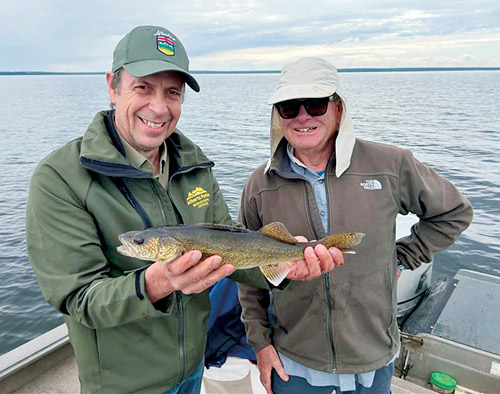
Each year, I am reminded of how lucky we are to live in Alberta, home to many great fishing opportunities. Albertans, Canadians and visitors from around the world can enjoy our beautiful fisheries every year—from ice-cold mountain streams to cool water lakes, wide rivers and southern reservoirs.
Fishing with family and friends offers real benefits. It’s an important part of Alberta’s culture and way of life. Getting out to your favourite fishing spot is good for the soul and remains an affordable recreational activity that all Albertans can enjoy.
2025 was a big year for recreational fisheries management. Forestry and Parks worked hard to expand angling and harvest opportunities while safeguarding the long‑term health of fish populations. Last season, anglers saw 27 new harvest opportunities for walleye and northern pike, and our trout stocking program delivered 2.1 million trout across 268 waterbodies—including the first cutthroat trout stocking since 2019.
We made major progress on expanding walleye stocking in Alberta, with four egg-collection sites operating and 18 waterbodies stocked. In total, 25.7 million fry and 6,000 fingerlings were stocked—nearly double the number stocked in 2024. Anglers also told us they want better yellow perch angling opportunities. In 2026, several lakes will be managed with new regulations intended to improve perch fishing, and biologists will keep working with partners to reestablish yellow perch fisheries through transfers.
A reminder that 2026 will see changes to the Walleye Special Harvest Licence (SHL) Program. Albertans will no longer need to purchase a draw application to obtain these licences. SHL licences will now be available on a first‑come, first‑served basis, with all licenses released April 28, 2026.
Our goal is to continue to protect and conserve fish populations while offering a wide range of fishing and fish harvesting opportunities. We will continue to promote the use of this renewable resource for all to enjoy.
Whether you’re a seasoned angler or introducing someone new to fishing during one of our free fishing weekends, I encourage you to get outside and enjoy Alberta’s incredible fishing opportunities this year.
Todd Loewen
Minister of Forestry and Parks .
How to Use Alberta's Guide to Sportfishing Regulations
When fishing in Alberta, you must follow:
1. All provincial regulations starting on this page and licencing requirements on this page.
2. Default or site specific waterbody regulations for each Watershed Unit (view here).
3. Provincial maximum possession limits for each species (view here).
Other information:
● Important Information – Management updates and new opportunities (this current page).
● Definitions – Important definitions (view here).
● Put-and-take stocked fisheries – Locations and regulations listed on this page. Stocked waterbodies with site specific regulations are listed in Watershed Unit tables and are identified with a fish symbol.
● Advisories, Corrections and Closures – may be implemented at any time. Check current information online at My Wild Alberta – Advisories, Corrections and Closures (mywildalberta.ca/fishing/ advisories-corrections-closures/default.aspx).
● Time of Day Angling Restriction – may be implemented in July and August in select flowing waters of southern Alberta during periods of low flow and high temperatures. Updates will be online at My Wild Alberta – Fishing Advisories, through social media channels and AlbertaRELM email.
How to Read the Site Specific Regulations (View pdf)
What's New in 2026
Regulations Updates
- Updates to support stocked trout fishing: Cow Lake (ES2), Spring Lake (PP2), Mitford Ponds (ES1) and Millers Lake (ES3).
- Simpler regulations: Some waterbodies with limited fish habitat and sportfish populations have been moved out of Watershed Unit site specific tables and now follow default Watershed Unit Regulations.
- New opportunity at Crane Lake (NB1): Northern pike harvest is now permitted at Crane Lake.
- Bow River tributary trout regulations: New catch-and-release regulations for trout on select Bow River spawning tributaries: Fish Creek and a portion of the Sheep River and tributaries, including Threepoint Creek and Ware Creek (ES1).
- Yellow perch initiatives: Size and quota limits at select lakes to support yellow perch angling opportunities.
Waterbodies with regulation changes, corrections or updates are highlighted blue and can be found in the Watershed Unit regulations starting here.
Special Harvest Licences (SHL)
- There is no more application and draw process for walleye SHLs - all Special Harvest Licences (Class A, B and C) are available for direct purchase by eligible Alberta resident anglers on a first-come, first-serve basis, until waterbody and/or Class quotas are reached.
- Up to 6 SHLs can be purchased per angler in any combination of waterbody and Class, subject to available quotas.
- A list of eligible waterbodies and available licence quotas can be found online at AlbertaRELM and MyWildAlberta.
- For more information on the SHL Program, view here.
- Available licences will be released on April 28, 2026, at 9 am.
Stocking and Transfers
- Trout Stocking: The stocking of ~2 million trout in more than 260 waterbodies is planned for 2026. Find more information here.
- Expanded walleye stocking: Four walleye spawn camps supported stocking in 18 waterbodies in 2025, with 25.7 million walleye fry and 6,000 fingerlings released—nearly double the number of fry stocked in 2024.
- The walleye stocking program will continue in 2026. Stay up to date by visiting MyWildAlberta Facebook and website for updates.
- Yellow Perch Transfers: In 2025, more than 3,700 yellow perch in total were transferred into Frenchman and Vincent lakes (NB1) with the help of volunteers. Additional yellow perch transfers are planned for 2026.
- Measures are always taken to prevent disease / aquatic pathogen transfer and the inadvertent transfer of aquatic invasive species.
Know before you go!
Always check the regulations for the waterbody you plan to fish, as rules can vary by location. Anglers are responsible for understanding and following the regulations that apply to where they are fishing. Being able to correctly identify any fish you catch is essential – if you don’t know, let it go. Check online for in-season regulation changes, angler advisories and Time of Day Angling Restrictions.
● Downloading a PDF copy of the Guide at open.alberta.ca/publications
● View it online at albertaregulations.ca
● Use Alberta’s Sportfishing Regulations Application at geospatial.alberta.ca/app/afr
● Pick up a printed copy of the Guide from licence retailers or a Alberta Fish & Wildlife office
Information About Fisheries Management
Alberta’s Fisheries Management System supports an integrated approach to managing fish populations and fisheries, consistent with Alberta’s Fish Conservation and Management Strategy, and is jointly led by Environment and Protected Areas and Forestry and Parks.
Learn more at Alberta’s Fisheries Management website and follow My Wild Alberta for updates and engagement opportunities.
https://www.alberta.ca/fisheries-management
https://www.facebook.com/MyWildAlberta
Aquatic Health
The impacts posed by aquatic invasive species, including fish disease, threaten Alberta’s fisheries and can extend beyond reducing recreational fishing opportunities. We all play an important role in keeping Alberta’s fish healthy.
Everyone can help stop the spread of aquatic invasive species through prevention, by following,
- CATCH IT, KILL IT, REPORT IT! If you catch an invasive fish do not return to water. Kill it, dispose of it properly or eat it, and report it to the Aquatic Invasive Species Hotline. If you don’t know, let it go, but take pictures before release, and report the sighting.
- CLEAN, DRAIN, DRY YOUR GEAR! Ensure no water, mud, plants, fish, or fish parts are moved from one waterbody to the next. This applies within Alberta as well as beyond our borders.
- PULL THE PLUG! In Alberta, all watercrafts must have the drain plug pulled while being transported.
- DON’T LET IT LOOSE! Never release water, plants, dead or live fish or any other animals into waterbodies they didn’t originate from.If you witness anyone releasing or transporting live fish, report it to Report-A Poacher line, you could be eligible for a reward.
- SEE IT, REPORT IT! Alberta has 52 listed aquatic invasive species including fish, plants, and invertebrates all prohibited for import, possession, or release.If you see anything that doesn’t seem to belong in or along water report species to the Aquatic Invasive Species Hotline with pictures for follow up.
- STOP AT WATERCRAFT INSPECTIONS! Aquatic invasive species can stowaway on watercraft, trailers, or equipment during transport. To protect our waters, Alberta has mandatory watercraft inspections for anyone travelling with a boat, jet ski, kayak, or any other watercraft.
- It is illegal to bypass any open watercraft inspection station while traveling with a motorized or non- motorized watercraft. Failure to stop may result in significant fines.
- From May 1 until Sept. 30, it is mandatory for all motorized and non-motorized watercraft to be inspected when crossing from the eastern or southern borders. If the closest inspection station is closed, Albertans and visitors must get their watercraft inspected within seven days and before launching into Alberta’s waters.
- It is illegal to bypass any open watercraft inspection station while traveling with a motorized or non- motorized watercraft. Failure to stop may result in significant fines.
Call 1-855-336-BOAT (2628) for Aquatic Invasive Species Hotline to report species sightings or for more information. Leave a voicemail and AIS staff will follow up as soon as possible.
Call 1-800-642-3800 - Report-A-Poacher for any suspicious or illegal observations, where an officer is warranted or submit details online at alberta.ca/report-a-poacher.
Report A Poacher
The REPORT A POACHER program provides Albertans with the opportunity to report suspected violations using a toll-free number: 1-800-642-3800 or #3800 on the TELUS Mobility network (courtesy TELUS Mobility). The line is in operation 24 hours a day, seven days a week.
Fishing or hunting out of season, night hunting, exceeding bag limits, illegal sale of fish and wildlife and deposit of harmful substances in lakes and rivers are violations that seriously affect fish and wildlife in Alberta. If you see or know of a violation, you should record all information, including
● date
● time
● location
● vehicle licence number
● vehicle description
● description of person(s) involved
● details of violation, and any other details, no matter how insignificant they may seem. You should then contact the nearest Fish and Wildlife office or call 1-800-642-3800 as soon as possible.
If the information provided concerns a resource violation and results in the laying of a charge, the reporter may be eligible for a reward. If you have any questions about this program, please contact the nearest Fish and Wildlife office.
Family Fishing Weekends
Albertans and visitors can fish in open waters without a sportfishing licence.
July 11 – 12, 2026 and February 13 - 15, 2027
Remember, fishing regulations still apply. A sportfishing licence is still required if using a Special Harvest Licence.
Indigenous Fishing Rights
Many Indigenous Peoples in Alberta have constitutionally protected rights to fish for food for themselves and their immediate household members in Alberta. These rights are recognized in law and provincial policy.
The Government of Alberta is committed to sustaining Indigenous food sources within the constraints of conservation obligations. Alberta’s fisheries are shared by a diverse community of users, it is important that all individuals using fisheries resources, whether they are exercising their rights or angling for recreation, do so with respect for one another.
For information on Indigenous rights and responsibilities related to fishing, please visit: www.alberta.ca/indigenous-hunting-and-fishing-in-alberta.aspx.
Recovery of Tagged Fish
● Fisheries biologists occasionally tag fish for research.
● Tagging is non-lethal to fish.
● There are different kinds and sizes of tags ranging from the size of a grain of rice to the size of a D-cell battery (0.5 to 4 inches).
● Tags are usually placed under the skin near the dorsal fin (in the flesh) or inside the body cavity.
● Anglers should inspect their catches thoroughly for tags and remove them prior to consuming.
If you catch a tagged fish, please report it to the nearest Fish and Wildlife Office.